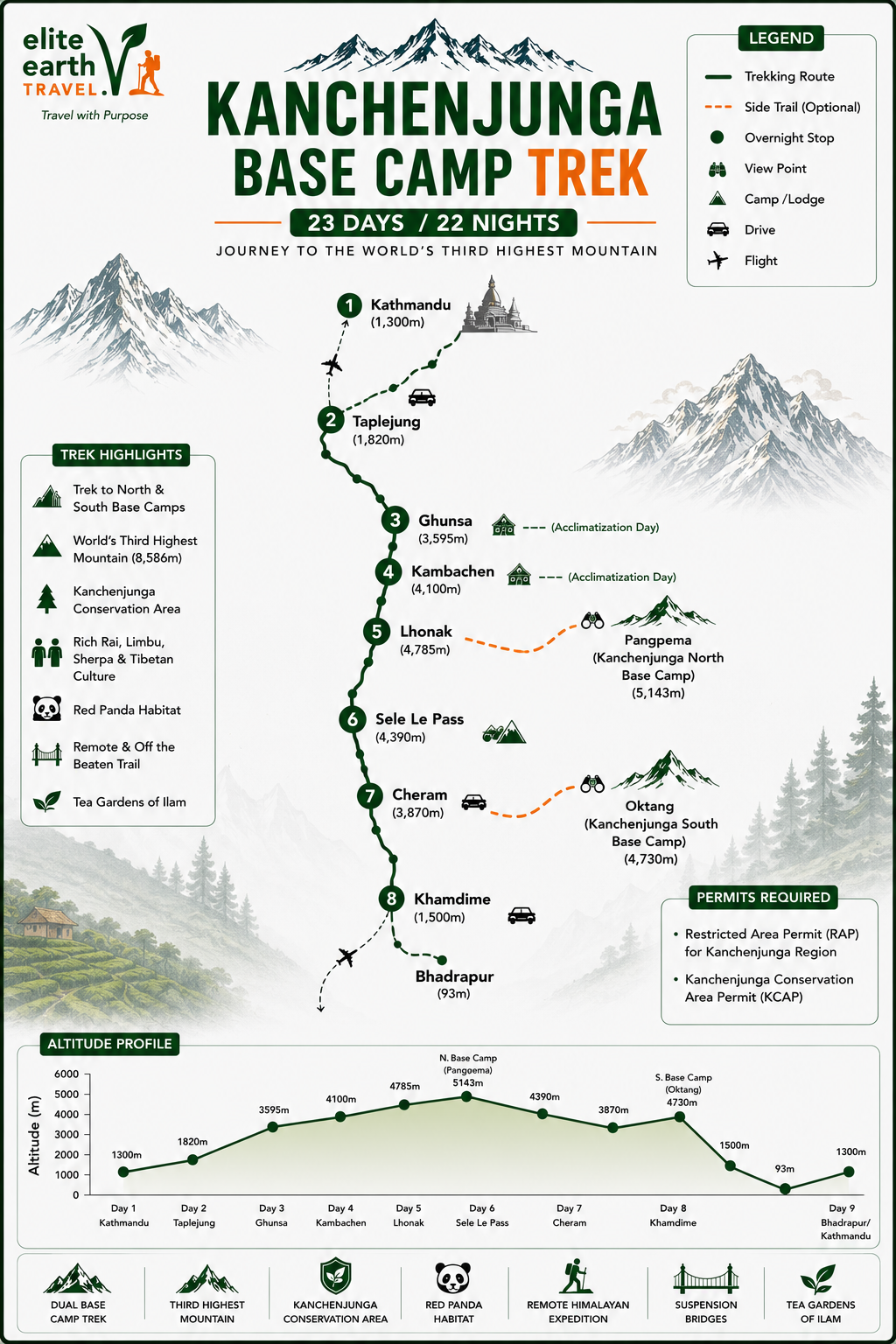
The Kanchanjunga Base Camp Trek is one of Nepal's most spectacular and least-explored Himalayan adventures, taking trekkers deep into the remote wilderness of eastern Nepal. Designed for those seeking an authentic off-the-beaten-path experience, this remarkable journey leads to both the Kanchenjunga North Base Camp (Pangpema) and Kanchenjunga South Base Camp, offering breathtaking views of Mount Kanchenjunga (8,586 m), the third-highest mountain in the world. Unlike the more crowded Everest and Annapurna trekking routes, the Kanchenjunga region rewards visitors with peaceful trails, untouched landscapes, and genuine Himalayan culture.
The adventure begins with a scenic flight from Kathmandu to Bhadrapur, followed by a drive through the famous tea gardens of Ilam and the beautiful hill district of Taplejung. From here, the trail gradually enters the pristine Kanchenjunga Conservation Area, one of Nepal's largest protected regions, renowned for its rich biodiversity, ancient forests, alpine meadows, glacial rivers, and dramatic mountain scenery. Trekkers pass through traditional villages, dense rhododendron and bamboo forests, suspension bridges, waterfalls, and rugged valleys before reaching the high Himalayas.
One of the highlights of the Kanchanjunga Base Camp Trek in Nepal is the opportunity to visit both sides of the Kanchenjunga massif in a single expedition. The northern route passes through remote settlements such as Ghunsa, Kambachen, and Lhonak before reaching Kanchenjunga North Base Camp, where panoramic views of Kanchenjunga, Jannu (Kumbhakarna), Chang Himal, Tent Peak, and surrounding glaciers create an unforgettable Himalayan panorama. The trail then crosses the scenic Sele La high-pass system before descending to Cheram and Ramche, eventually leading to the equally impressive Kanchenjunga South Base Camp, known for its dramatic glacier views and close-up perspective of the mountain's southern face.
Beyond its extraordinary landscapes, the trek provides a meaningful cultural experience. Along the route, trekkers encounter welcoming Limbu, Rai, Sherpa, and Tibetan Buddhist communities, visit centuries-old monasteries, prayer walls, and traditional Himalayan villages, and gain insight into a way of life that has remained largely unchanged for generations. The region's isolation has helped preserve both its cultural heritage and natural beauty, making every village stop a memorable part of the journey.
Although the Kanchanjunga Base Camp Trek is considered a challenging high-altitude trek due to its duration and remote terrain, it does not require technical climbing skills. Carefully planned acclimatization days, experienced trekking guides, and a gradual ascent allow trekkers to safely enjoy the adventure while experiencing one of Nepal's most rewarding trekking destinations.
The best time to undertake the Kanchanjunga Base Camp Trek is during spring (March to May) and autumn (September to November), when stable weather, clear skies, and comfortable temperatures provide excellent trekking conditions and outstanding mountain views. Whether you are searching for a remote Himalayan expedition, a wilderness trekking experience, or an unforgettable journey to the base of the world's third-highest mountain, the Kanchanjunga Base Camp Trek offers a perfect combination of adventure, culture, and natural beauty that few trekking routes in Nepal can match.
Quick Facts
| Feature | Details |
|---|---|
| Region | Kanchenjunga Region, Eastern Nepal |
| Duration | 23 Days |
| Maximum Altitude | 5,143 m (Kanchenjunga North Base Camp – Pangpema) |
| Trek Grade | Challenging |
| Accommodation | Hotel & Traditional Teahouse |
| Best Seasons | Spring (March–May) & Autumn (September–November) |
| Starting Point | Kathmandu |
| Ending Point | Kathmandu |
| Transportation | Domestic Flight & Private Vehicle |
| Permit Required | Kanchenjunga Conservation Area Permit (KCAP) & Restricted Area Permit (RAP) |
| Major Ethnic Groups | Limbu, Rai, Sherpa & Tibetan Communities |
| Highest Base Camp Visited | Kanchenjunga North Base Camp (Pangpema) |
| Major Attractions | North & South Base Camps, Sele La Pass, Ghunsa Village, Kanchenjunga Conservation Area |
| Difficulty Level | Remote High-Altitude Trek |
| Daily Walking Hours | 5–8 Hours |
Kanchanjunga Base Camp Trek Difficulty
One of the most common questions trekkers ask before planning the Kanchanjunga Base Camp Trek is whether the trek is suitable for them. The trek is generally classified as a challenging high-altitude trekking adventure, primarily due to its long duration, remote location, rugged terrain, and significant elevation gain. However, it does not require any technical climbing skills or previous mountaineering experience.
Unlike shorter trekking routes in Nepal, the Kanchanjunga Base Camp Trek takes trekkers through isolated mountain valleys where facilities are limited and daily walking distances are longer. Throughout the journey, trekkers typically walk between 5 and 8 hours per day, navigating forest trails, stone staircases, suspension bridges, glacial moraines, alpine meadows, and rocky mountain paths. The highest point of the trek is Kanchenjunga North Base Camp (Pangpema) at approximately 5,143 meters, where proper acclimatization becomes essential.
To minimize the risk of altitude sickness, the itinerary includes dedicated acclimatization days at Ghunsa and Kambachen, allowing the body to gradually adjust to higher elevations. Maintaining a steady pace, staying hydrated, eating nutritious meals, and following your guide's recommendations significantly improve the trekking experience.
Trekkers with good physical fitness, regular hiking experience, and adequate preparation will find this trek both achievable and immensely rewarding. The combination of dramatic Himalayan landscapes, authentic mountain culture, and remote wilderness makes every challenge worthwhile.
Difficulty Overview
- Trek Grade: Challenging
- Maximum Altitude: 5,143 m (Kanchenjunga North Base Camp)
- Daily Walking Hours: 5–8 Hours
- Technical Climbing: Not Required
- Suitable For: Experienced trekkers and physically fit beginners with preparation
- Risk of Altitude Sickness: Moderate to High (with proper acclimatization)
Best Time for Kanchanjunga Base Camp Trek
The Kanchanjunga Base Camp Trek can be undertaken during different times of the year, but spring and autumn provide the most favorable trekking conditions. These seasons offer stable weather, comfortable temperatures, excellent visibility, and spectacular Himalayan views.
Spring (March – May)
Spring is considered one of the best seasons for trekking in the Kanchenjunga region. The forests come alive with blooming rhododendrons, magnolias, and wildflowers, creating colorful landscapes throughout the lower elevations. Clear mornings, pleasant daytime temperatures, and excellent mountain visibility make this season ideal for photography and wildlife observation.
Autumn (September – November)
Autumn is the most popular trekking season in Nepal. After the monsoon rains, the skies become exceptionally clear, offering uninterrupted views of Kanchenjunga, Jannu, Kabru, and the surrounding Himalayan peaks. Comfortable temperatures, dry trails, and stable weather make this the preferred season for most trekkers.
Winter (December – February)
Winter transforms the Kanchenjunga region into a spectacular snow-covered wilderness. While lower elevations remain accessible, heavy snowfall and freezing temperatures at higher altitudes can make the trek considerably more challenging. Winter is recommended only for experienced trekkers seeking solitude and prepared for harsh mountain conditions.
Monsoon (June – August)
The monsoon season brings lush greenery and vibrant landscapes to eastern Nepal. However, frequent rainfall, slippery trails, leeches in lower forests, landslides, and reduced mountain visibility make trekking less favorable during this period. Although the trails are quieter, weather conditions can occasionally affect transportation and trekking schedules.
Kanchanjunga Base Camp Trek Cost
The Kanchanjunga Base Camp Trek cost varies depending on group size, accommodation preferences, transportation options, guide and porter services, and the overall level of comfort included in the package. Since the Kanchenjunga region is one of Nepal's most remote trekking destinations, logistics and transportation costs are generally higher than those of more accessible trekking routes.
Most trekking packages include domestic flights, private ground transportation, trekking permits, teahouse accommodation, meals during the trek, experienced licensed guides, porter services, and all necessary logistical arrangements. Additional personal expenses may include travel insurance, trekking equipment rental, snacks, beverages, Wi-Fi, battery charging, hot showers, laundry services, and gratuities.
At Elite Earth Travel, we believe in transparent pricing with no hidden charges. Our carefully designed trekking packages prioritize safety, ethical tourism, porter welfare, and personalized service while providing exceptional value for an unforgettable Himalayan adventure.
Permits Required for Kanchanjunga Base Camp Trek
The Kanchanjunga Base Camp Trek lies within a protected conservation area and a government-designated restricted region. Trekkers must obtain the necessary permits before beginning the journey.
Kanchenjunga Conservation Area Permit (KCAP)
The Kanchenjunga Conservation Area Permit is mandatory for all trekkers entering the conservation area. The permit supports environmental conservation, biodiversity protection, trail maintenance, and sustainable community development throughout the region.
Restricted Area Permit (RAP)
As the Kanchenjunga region borders India and Tibet (China), parts of the trekking route fall within Nepal's restricted trekking zones. Trekkers are required to obtain a Restricted Area Permit, which can only be arranged through a registered trekking agency. Current regulations also require a minimum of two trekkers accompanied by a licensed guide.
Elite Earth Travel manages all permit applications and government formalities, ensuring a smooth and hassle-free trekking experience.
Accommodation and Food During the Trek
Accommodation throughout the Kanchanjunga Base Camp Trek is provided in traditional Himalayan teahouses operated by local families. Although facilities become more basic at higher elevations, the teahouses offer warm hospitality, comfortable twin-sharing rooms, and an authentic mountain experience. Most lodges feature communal dining areas where trekkers can relax and interact with fellow travelers after each day's journey.
Meals are freshly prepared using locally available ingredients and provide the energy needed for high-altitude trekking. Menu options typically include both Nepali and international dishes, ensuring a variety of nutritious meals throughout the trek.
Popular meal options include:
- Traditional Dal Bhat
- Fried Rice
- Vegetable Noodles
- Garlic Soup
- Thukpa
- Tibetan Bread
- Pancakes
- Pasta
- Potatoes
- Omelets
- Seasonal Vegetables
- Tea, Coffee & Hot Lemon
Elite Earth Travel also proudly offers vegan-friendly trekking options, with carefully selected plant-based meals that support energy, recovery, and overall well-being throughout the expedition.
Why Choose Elite Earth Travel for Kanchanjunga Base Camp Trek
Elite Earth Travel is committed to delivering authentic, ethical, and sustainable trekking experiences throughout Nepal's Himalayas. Our experienced local team combines professional service with deep regional knowledge to ensure every journey is safe, memorable, and culturally enriching.
Our Commitment
- Experienced licensed local trekking guides.
- Ethical porter welfare with fair wages and proper insurance.
- Small group departures for a more personalized experience.
- Sustainable tourism that benefits local communities.
- Carefully planned itineraries with proper acclimatization.
- Vegan-friendly meal options throughout the trek.
- High safety standards with first aid support and emergency preparedness.
- Transparent pricing with no hidden costs.
- 24/7 customer support before and during your adventure.
Our mission is not only to guide you to Kanchenjunga Base Camp but also to create meaningful travel experiences that respect nature, support local communities, and leave lasting memories.
✅ Airport arrival and departure transfers in Kathmandu.
✅ Domestic flight from Kathmandu to Bhadrapur and return.
✅ Private ground transportation as per the itinerary.
✅ Hotel accommodation in Kathmandu.
✅ Teahouse accommodation during the trek.
✅ Kanchenjunga Conservation Area Permit (KCAP).
✅ Restricted Area Permit (RAP).
✅ Licensed English-speaking trekking guide.
✅ Three meals per day during the trek (Breakfast, Lunch & Dinner).
✅ Vegan meal options upon request.
✅ Comprehensive first aid medical kit and pulse oximeter.
✅ Government taxes and service charges.
❌ International airfare.
❌ Nepal entry visa fees.
❌ Personal travel insurance, including emergency helicopter evacuation.
❌ Personal trekking equipment and clothing.
❌ Personal expenses and shopping.
❌ Hot showers, battery charging, and Wi-Fi charges at teahouses.
❌ Alcoholic beverages, soft drinks, and bottled water.
❌ Additional accommodation caused by delays, weather, or unforeseen circumstances.
❌ Tips for guides, porters, and support staff.
❌ Any services not specifically mentioned under “Cost Includes.”
Arriving in Kathmandu for the Kanchenjunga Base Camp trek marks the beginning of a remote and adventurous journey to one of Nepal’s least-traveled trekking regions. The capital provides a brief but important pause to explore its rich cultural landmarks.
Our trekking adventure starts with us taking a flight to Bhadrapur from Kathmandu. It is a quick flight of about 45 minutes only. After reaching Bhadrapur, we are going to drive to Ilam which is the heart of the tea plantation area of the country. We will stay overnight at a hotel in Ilam.
After watching a beautiful sunrise in Ilam, we will start our journey by driving through terraced fields and hills to reach Taplejung. We can visit different monasteries and Gompas when we are in Taplejung. We will stay overnight at a hotel.
The actual trekking starts from today as we leave Taplejung behind and trek to Chirwa on a rough trail. We’ll trek along the banks of the Thiwa Khola River, crossing a precarious wooden bridge. Chirwa is a quaint village situated in the Taplejung District of Nepal, in the eastern part of the country. It serves as an important starting point for trekkers and adventurers venturing into the stunning Kanchenjunga region.
The trail from Chirwa to Lelep on the Kanchenjunga Circuit Trek passes through the village of Tapethok and brings us to the Kanchenjunga Conservation Area. It is a long 7-hour trek. After trekking for seven hours, you’ll reach Lelep, a Tibetan village, where you’ll spend the night in a teahouse.
The trek from Lelep to Amjilosa is a 5–6-hour hike on the Kanchenjunga Circuit Trek, taking you through a scenic route along the Ghunsa Khola, a river, and involve crossing suspension bridges. The village of Amjilosa is mainly used during the time when the yaks and sheep are in the pastures so very few families live here full time.
The trek from Amjilosa to Gyabla takes you through lush forests, potentially with views of red pandas, and culminates in a small village at 2,725 meters after a 4–5-hour hike. Gyabla is a small village with traditional houses and stunning mountain views. The people in Gyabla are influenced by Tibetan culture.
The trek from Gyabla to Ghunsa involves a 5–6-hour hike through diverse landscapes, including forests and a Tibetan-style village called Phole, culminating in the important acclimatization stopover of Ghunsa . Ghunsa Village is a hidden gem nestled in the heart of the Himalayas, in the Taplejung District of northeastern Nepal. This quaint village is not just a stopover but a destination that embodies the serene beauty and rich cultural tapestry of the Himalayan lifestyle.
Acclimatizing is the most important process for our bodies to adjust to changing high altitudes while trekking. We can visit a monastery situated in Ghunsa and spend time with the local people to know more about their culture and lifestyle.
The trek from Ghunsa to Kambachen involves a 5–6-hour hike along the riverbank, through forests and meadows, crossing a bridge at Rampuk Kharka, and navigating a landslide area before reaching Kambachen. Kambachen is a remote village located in the Kanchenjunga region of Nepal. Situated at an altitude of approximately 4,000 meters (13,123 feet) above sea level, Kambachen serves as a significant stopover for trekkers and mountaineers exploring the Kanchenjunga massif.
We will take another rest day in Kambachen to rejuvenate our exhausted bodies in preparation for the visit to Kanchenjunga's north base camp. Kambachen is located in an area inhabited predominantly by Sherpa people, who have a unique culture shaped by their close relationship with the mountains
The trek from Kambachen to Lhonak is a challenging 5–6-hour hike on the Kanchenjunga Base Camp trek, involving crossing moraines, rocky terrain, and glacial streams, with stunning views of the Kanchenjunga range and other high peaks. The trek to Lhonak is considered challenging, as it involves navigating through varying terrains and dealing with high altitudes. The region surrounding Lhonak is characterized by its rugged and untouched beauty.
The Lhonak to Kanchenjunga North Base Camp trek involves a 7-8-hour hike, following a rocky trail along moraines, offering stunning views of the mountain and its surrounding peaks. After soaking up the panoramic views of Kanchenjunga and other surrounding mountains we will return to Lhonak for the night.
This trek involves descending from Lhonak to Ghunsa, offering stunning views of rhododendron forests and the majestic Kanchenjunga range. We will stay overnight at Ghunsa to prepare for our trek next day.
The trail ascends sharply, passing through high-altitude meadows and rocky ridges, eventually leading to Sele Le Camp. The route offers diverse landscapes, including forests, waterfalls, ridges, and views of snow-capped mountains. Sele Le Camp is located on the south side base camp of Kanchenjunga.
After having a hearty breakfast, we will move towards Ramche and rest for a few minutes. Then from there we will trek to The trek from Sele Le to Cheram involves a challenging 5–6-hour descent, crossing several passes (Sinion La, Mirgin La, and Sinelapche Bhanjyang), and offering views of Jannu Himal and Makalu Himal, before reaching Cheram, the only settlement on this route. The trail includes both steep descents and ascents, with rugged terrain. Overnight stay at Cheram.
After having a hearty breakfast, we will move towards Ramche and rest for a few minutes. Then from there we will trek to Kanchenjunga South Base Camp which is only 1 hour away from Ramche. We will return back to Cheram after watching the stunning views to our heart's content from the base camp.
Our trek today will take us past landslide areas and offer stunning views of verdant forests as we descend. This brings us closer to Kanchenjunga National Park, where you can enjoy an optional evening trek. Our trail leads us to a steep uphill over an area prone to landslides and through forests. There are no settlements until we reach Torongding, where there are a few teahouses.
We will continue to descend today as well. We pass over a landslide-prone area leading to Lasiya Bhanjyang. Our trail continues to descend steeply towards a forest. After hours of trekking, we will reach a big settlement area in Yamphuding.
The trek from Yamphuding to Khebang, is a 5–6-hour descent through villages and terraced fields, passing through Mamangkhe and Khesewa, and crossing a suspension bridge over the Kabeli River. We can find interesting villages and terraced fields on our route.
Today is the last day of our trekking. We will trek a steep ridge downwards till you reach Apple Danda. The next stop is Jor Pool, and then we will take a short break in Simal Danda. We will reach Kahmdime, another pleasant village, on the trek in the evening.
The drive from Khamdime to Bhadrapur takes about 10 hours, passing through small settlements, lush forests, and green grasslands. The initial part of the drive can be off-road, but you'll eventually transition to a highway leading to Bhadrapur.
After having breakfast and finishing our morning ritual we will drive towards the airport and fly back to Kathmandu with a heavy heart but lots and lots of good memories and experiences.